CHEVRON: SCOTUS DRIVES STAKE THROUGH HEART OF THE DEEP STATE

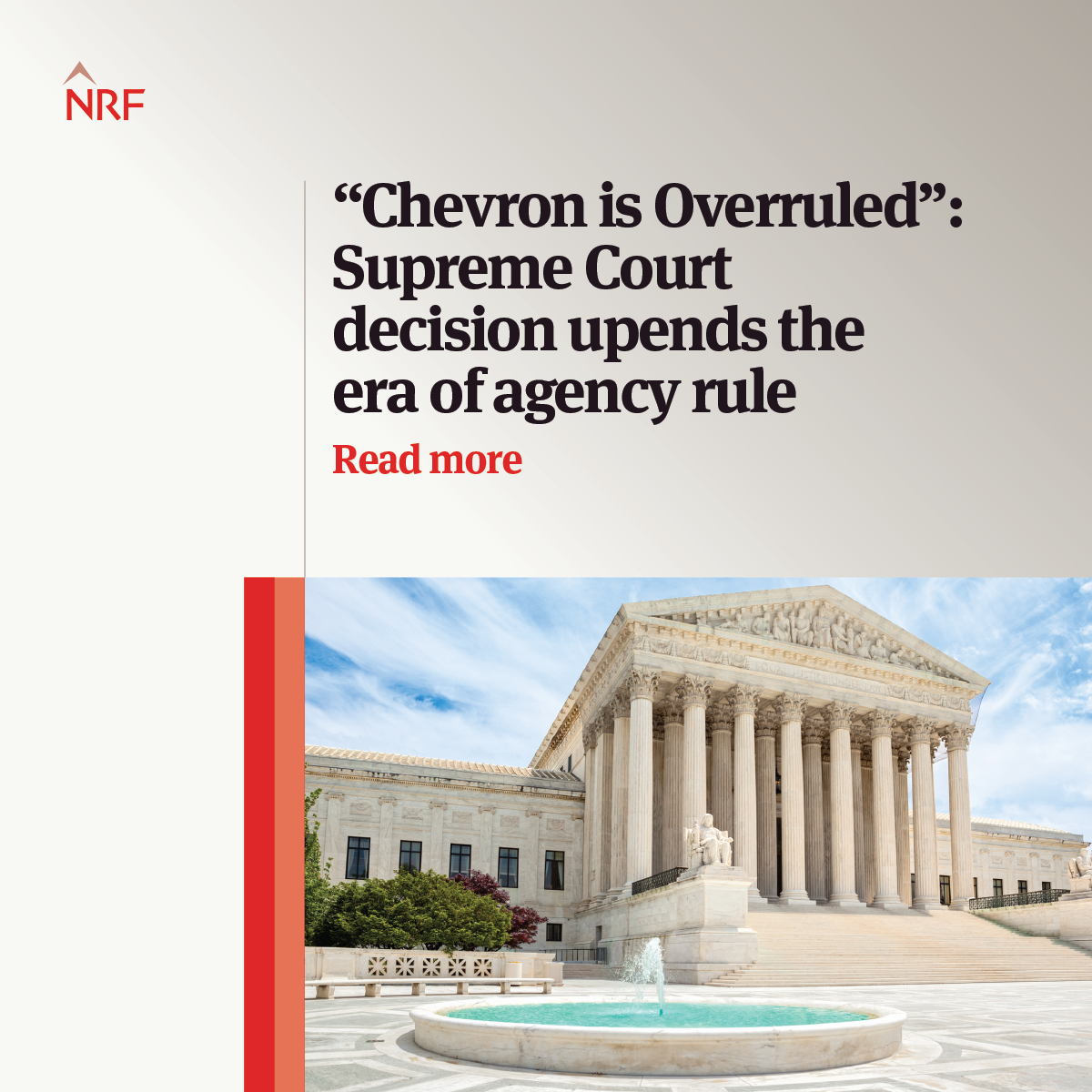
CHEVRON: SCOTUS DROVE STAKE THROUGH THE HEART OF THE DEEP STATE
By John Livingston
July 3, 2024
Scotus has issued an unprecedented number of opinions that have overturned long-established liberal rules and regulations that we all are forced to abide by, but none has been more important than CHEVRON. Remember that word as you will hear it a thousand times over. Let me get to the bottom line: CHEVRON’s decision prevents bureaucrats from making regulations and laws that we must abide by. This decision has overturned a huge number of rules and regulations we have been forced to obey for the past 40 years. NOw bureaucrats can’t impose rules and regulations on us. Only our elected representatives can do that from now on forward.
What was the Chevron deference?
It was the Leftist inspired decision of the 1984 variation of the SCOTUS that offered federal agencies like the SEC, EPA, and ATF, to name a few of the thousands that exist to harass, tax, fine, and spit on us. It gave them the power to impose their interpretation of the law whenever the law was ambiguous. What we know is that there is no limit to the imaginations of the woke, commie Leftists who lurk in every agency and are enmeshed by the Obama and Biden administrations. These bureaucrats had the power to translate ambiguous laws. In plain English, it gave the agencies the license to consider themselves experts.
I know what you’re believing: why would anybody think about any civil servant or agency as an expert in anything, however, administration?
The agencies, God help us, were deemed specialists by a nine-person judiciary that had no idea if those people were experts (extremely unlikely) or not (a near certainty).In fact, if you look at the vast majority of the federal bureaucrats they are among the worst and poorest examples of the woke, commie Leftist kindergartens disguised as universities that we can imagine. Many of them have no place in any decision making organization let alone making up laws and regulations that translate their woke, commie Leftist indoctrination into rules we have to live by and with no ability to take them to court!
Let’s do this correctly.
The Chevron Deference
The teaching of Chevron deference, which came from the 1984 Supreme Court case involving Chevron U.S.A., Inc., and the Natural Resources Defense Council, Inc., mandated that courts reveal deference to a federal agency’s analysis of a statute that is open to several interpretations and falls under the agency’s province.
Why would any agency translate an uncertain statute?
This “deference” enabled them to translate the statute without any real danger of lawsuits.
Under Chevron, as long as the agency’s analysis was “reasonable,” courts were bound to accept it, even if the court believed various analyses were more reasonable.
How would this work:
What constitutes a “sensible” expectation in this scenario?
I don’t understand!
Yet, this doctrine has been the cornerstone of administrative law for almost forty years, offering federal agencies vast power to shape the laws they enforce. Yes, they create and implement, which, by my math, breaches the concept of “checks and balances.” Chevron created a Fourth branch of government that is unelected, well-paid, and accountable to no one, including the President for whom they supposedly work.
The Supreme Court made a major decision last week by reversing “The Chevron Deference,” triggering a stir in the political sphere.
This development is immense and represents a significant change in the dynamics of authority in between the nationwide government and the It arrives at a crucial juncture and is an apparent success for those who uphold the concepts of restricted federal government control, personal liberty, and adherence to legal principles.
“The Emergence of a Technocratic Regime”
To understand the defects of Chevron’s deference, it’s crucial to recognize the development of the administrative state in the United States. In the past hundred years, the federal government has undergone considerable development, leading to a proliferation of agencies that possess substantial authority to form policy. These companies, led by non-elected officials, have the power to produce guidelines and regulations that hold legal sway, influencing a vast range of elements that shape American society.
The Chevron deference was the Miracle-Gro for this expansion. It permitted agencies to analyze ambiguous statutes without meaningful judicial oversight. This deference effectively moved power far from the judiciary, which is constitutionally tasked with interpreting the law, and put it in the hands of federal agencies. These companies “Chia-petted” their way into puffed-up administrative disasters.
The Erosion of Individual Liberties
The Chevron deference’s disintegration of personal autonomy was particularly troubling. By empowering companies to specify vague legislation, Chevron allowed government officials to design and carry out restrictions that infringed on citizens’ rights. This phenomenon was especially alarming in areas such as environmental management, health care, and monetary guidelines, where bureaucratic choices frequently had profound and extensive effects on people and businesses alike.
One circumstance is the Environmental Protection Agency (EPA), which has made use of Chevron-granted power to enforce substantial rules relating to air and water quality have resulted in much better environmental outcomes; others have placed significant needs on services and people without legal support. Similar scenarios can be observed with firms such as the Department of Health and Human Services and the Securities and Exchange Commission (SEC) led by Gary Gensler, where the Chevron deference has been used to support broad understandings of their regulatory duties.
This regulatory band-aid getting duped may send out Bitcoin to 6 figures.
The Menace to Legal Governance
The lack of accountability was especially apparent in cases where companies provided regulations that opposed clear legal intent.
Under Chevron, as long as the agency’s interpretation was considered “affordable,” courts were forced to uphold it, even if it conflicted with the statute’s plain language. This deference efficiently insulated agencies from judicial evaluation, permitting them to run with near-unchecked authority.
A Return to Constitutional Principles
The Supreme Court’s landmark ruling to reverse Chevron represents a significant turning point in the quest to restore basic constitutional values and curb the unchecked power of government administrations. Moving forward, federal agencies will be held accountable for remaining within their legally specified bounds, and the judiciary will examine their actions.
In its ruling, the Court stressed the significance of preserving the separation of powers, an essential concept of the Constitution. By curbing the power of federal agencies, the decision reinforces the idea that laws should be made by chosen representatives in Congress, not by unelected bureaucrats.
“The Road Ahead: Exploring the Consequences of these days’s Decisions”
Bringing back the judiciary’s authority in translating the law is expected to lead to a regulatory system that is fairer and more transparent. Federal agencies will have to develop regulations more, as they will undergo extensive court examination.
This ruling might unlock extra changes aimed at diminishing and limiting the reach of the administrative state. Fans of limited government and personal freedoms may take this opportunity to make laws that limit agency authority.
This decision sends a clear message: nobody is above the law, not even the bureaucrats who wield regulatory power in a constitutional republic.
The Chevron deference is a welcome development for individuals who treasure flexibility, restricted governmental authority, and the supremacy of the law. It declares the dawn of a brand-new era in American governance, poised to be more fair, answerable, and respectful to the constitutional tenets.
God help us, we were deemed specialists by a nine-person judiciary that had no idea if those people were experts (extremely unlikely) or not (a near certainty).
The Supreme Court made a major decision last week by reversing “The Chevron Deference,” triggering a stir in the political sphere.
This development is immense and represents a significant change in the dynamics of authority in between the nationwide government and the It arrives at a crucial juncture and is an apparent success for those who uphold the concepts of restricted federal government control, personal liberty, and adherence to legal principles.
The Erosion of Individual Liberties
The Chevron deference’s disintegration of personal autonomy was particularly troubling. By empowering companies to specify vague legislation, Chevron allowed government officials to design and carry out restrictions that infringed on citizens’ rights. This phenomenon was especially alarming in areas such as environmental management, health care, and monetary guidelines, where bureaucratic choices frequently had profound and extensive effects on people and businesses alike.
One circumstance is the Environmental Protection Agency (EPA), which has made use of Chevron-granted power to enforce substantial rules relating to air and water quality have resulted in much better environmental outcomes; others have placed significant needs on services and people without legal support. Similar scenarios can be observed with firms such as the Department of Health and Human Services and the Securities and Exchange Commission (SEC) led by Gary Gensler, where the Chevron deference has been used to support broad understandings of their regulatory duties.
This regulatory band-aid getting duped may send out Bitcoin to 6 figures.
The Menace to Legal Governance
The lack of accountability was especially apparent in cases where companies provided regulations that opposed clear legal intent.
Under Chevron, as long as the agency’s interpretation was considered “affordable,” courts were forced to uphold it, even if it conflicted with the statute’s plain language. This deference efficiently insulated agencies from judicial evaluation, permitting them to run with near-unchecked authority.
A Return to Constitutional Principles
The Supreme Court’s landmark ruling to reverse Chevron represents a significant turning point in the quest to restore fundamental constitutional values and curb the unchecked power of government administrations. Moving forward, federal agencies will be held accountable for remaining within their legally specified bounds, with the judiciary examining their actions.
In its ruling, the Court stressed the significance of preserving the separation of powers, an essential concept of the Constitution. By curbing the power of federal agencies, the decision reinforces the concept that laws should be made by chosen representatives in Congress, not by unelected bureaucrats.
“The Road Ahead: Exploring the Consequences of these days’s Decisions”
Bringing back the judiciary’s authority in translating the law is expected to lead to a regulatory system that is fairer and more transparent. Federal agencies will have to develop regulations more, as they will undergo extensive court examination.
This ruling might unlock extra changes aimed at diminishing and limiting the reach of the administrative state. Fans of limited government and personal freedoms may take this opportunity to make laws that limit agency authority.
This decision sends a clear message: nobody is above the law, not even the bureaucrats who wield regulatory power in a constitutional republic.
Chevron deference is a welcome development for individuals who treasure flexibility, restricted governmental authority, and the supremacy of the law. It declares the dawn of a brand-new era in American governance, poised to be more fair, answerable, and respectful of constitutional tenets.