Jack Smith Is a Sham. His Cases Are Legal Hit Jobs

Jack Smith is a sham. His cases are legal hit jobs
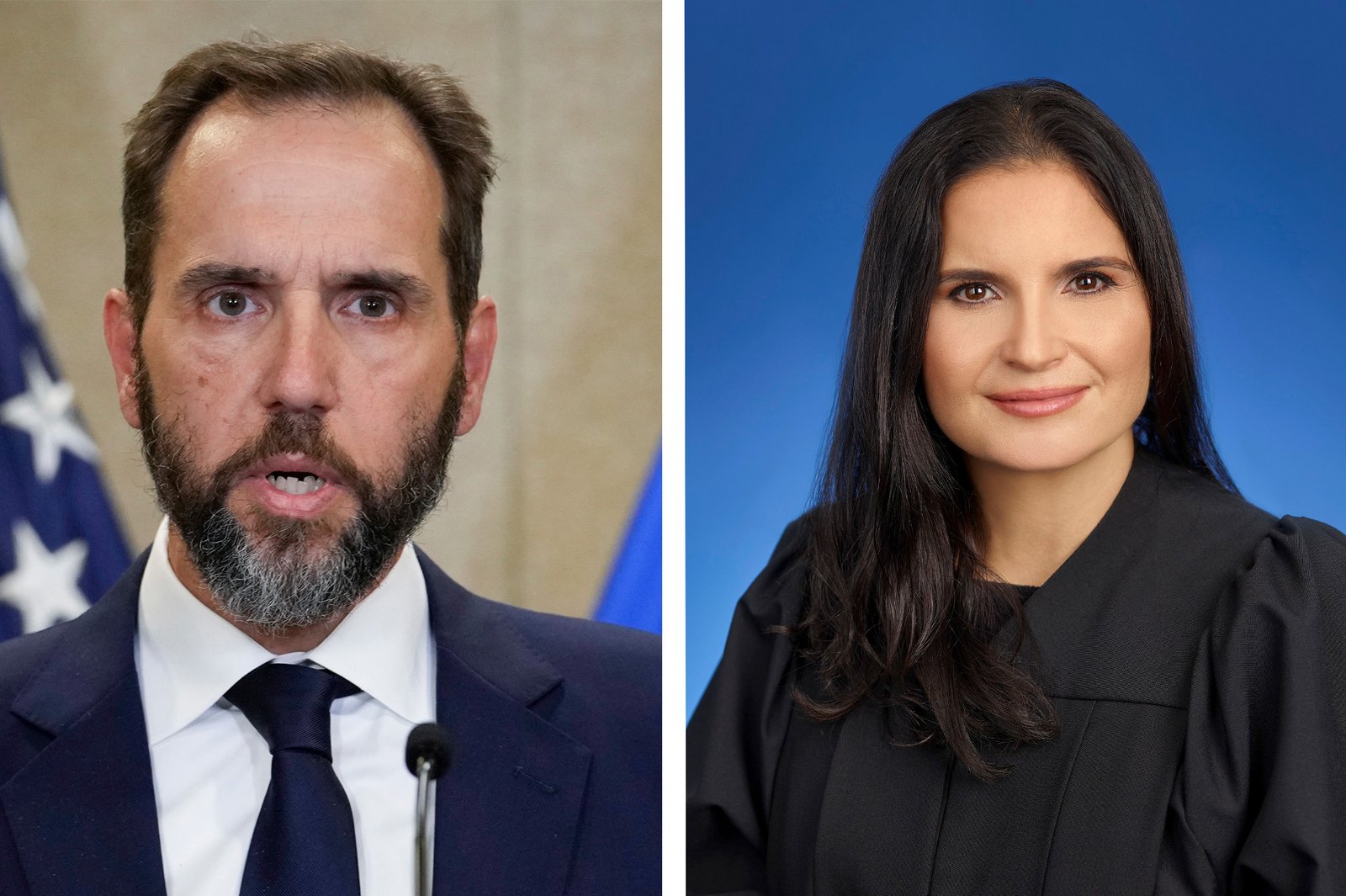
On Friday, Judge Aileen Cannon, overseeing the Florida-based records prosecution of previous president Donald Trump, heard a suit relating to the legitimacy of the appointment of exceptional district attorney Jack Smith. On Sunday, his office offered a response to those complaints. On Monday, the court amused the oral arguments concerning this issue. Based upon his arguments, we can understand that the two cases (Florida and Washington, D.C.) are illegitimate. Now, we must await Judge Cannon’s opinion.
On Sunday evening, Mark Levin revealed on Fox News that his Landmark Legal Foundation had submitted a brief questioning the validity of Jack Smith’s appointment. He laid out the legal arguments. More information demonstrates the weak point of Smith’s argument. Levin noted that Ed Meese and Michael Mukasey provided briefs arguing against Smith’s visit. I will give the details as briefly as possible.
The Appointments Clause in the U.S. Constitution’s Article II, Section to influence the federal government’s leadership. It specifies that the president has the power to choose individuals for various crucial positions based on the recommendations and authorization of the Senate. This includes Ambassadors, public Ministers and Consuls, Supreme Court Judges, and other government Officers, except for positions particularly mentioned in the Constitution. Additionally, Congress can pass laws that provide the president, the courts, or department heads the authority to select lower-level officers.
In this way, the power to develop offices and appoint those persons is separated, which was not the case under the British royal control in 1776. Then founders picked to permit the separation of powers and a check on the power of the Executive through Congress.
In his response to the grievance, Jack Smith claimed that his position falls under the classification of inferior officer. He referenced statutes that allow the Justice Department to make such appointments. He also conjured up a 1992 declaration from Senator Bob Dole to support his claim. Smith acknowledged that he did not go through Senate verification, which provides credibility to his argument. Furthermore, he pointed out that his predecessor, Attorney General Bill Barr, had made similar appointments. He forgot to mention that these were appointments of the District Attorney, all of which were nominated by the President and confirmed by the Senate.
Throughout his 2nd term as Attorney General, Barr designated special prosecutors currently authorized U.S. lawyers by the Senate. Since Jack Smith did not get Senate approval, he holds a lower-ranking position. The Supreme Court established in Buckley v. Valeo that only individuals with significant authority under U.S. laws are thought about as “Officers of the United States” and should be appointed under the Appointments Clause. In Morrison v. Olson, the Court identified certain qualities of “inferior Officers,” including being detachable by a higher-ranking Executive Branch official and having constraints on duties, jurisdiction, and tenure. In Edmond v. United States, the Court specified “inferior Officers” as those whose work is overseen by individuals selected through presidential nomination with Senate approval. Examples of such “inferior” officers include district court clerks, federal election managers, the Watergate special prosecutor, and independent counsels selected under the Ethics in Government Act of 1978.
The Justice Department has developed rules for special prosecutors that align with the 1978 legislation. Throughout a June hearing, Representative Thomas Massie challenged Attorney General Merrick Garland about the validity of Smith’s visit, pointing out a memo from previous Attorney General Ed Meese. Garland refused to provide a clear reaction. It’s possible that Garland acknowledged that direct participation in the events would suggest White House interference in the election, which could be troublesome. Despite this, the administration declares Smith operates individually, indicating he holds a senior position requiring nomination and Senate confirmation.
Moreover, a substantial defect exists in Smith’s reasoning. The legislation he introduced, which mattered in Cannon’s court, ended in 1999. There is no statutory basis for the Department of Justice to entrust such expansive authority to a secondary official, thus contradicting the constitutional arrangement governing appointments.
Sorry, but Smith’s legal argument is sophomoric. This circumstance explains all the leftist attacks against Judge Cannon, who is functioning as a genuine judge.