Biden Regime Aids Iran Terrorism
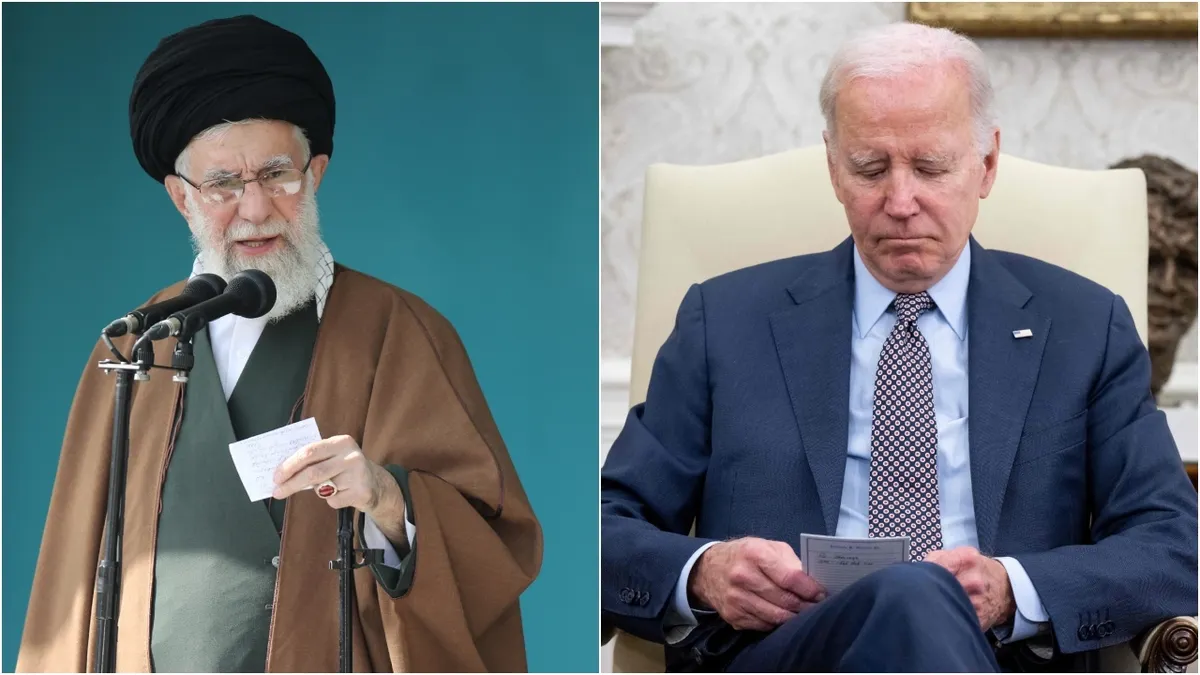
The administrations led by Obama and Biden are responsible for indirectly supporting a nuclear-armed Iran. In spite of attempts at diplomacy, the concessions made to Iran have, in fact, enhanced the Iranian government rather than suppressed its nuclear program. Biden Regime Aids Terrorism. The absence of stringent monitoring and enforcement and the lifting of secondary sanctions have allowed Iran to continue advancing its atomic efforts without dealing with considerable obstacles.
Iran has been advancing its ballistic missile innovation and conducting test launches in defiance of UN resolutions. The increasing aggressiveness of Iran’s large militia, the Islamic Revolutionary Guard Corps (IRGC), and its were not given adequate attention. As a result, Iran has been able to improve its military capabilities and participate in local hostility without facing substantial consequences.
The Iranian federal government deliberately dispersed these resources to strengthen and broaden its network of regional allies, incorporating essential locations such as Syria, Iraq, Lebanon, Yemen, Sudan, Somalia, Mali, Burkina Faso, and the Gaza Strip.
The Trump administration introduced a policy of intense economic constraints on Iran, mainly targeting a sharp decrease in the nation’s oil sales and imposing rigid “secondary sanctions” that forbade any nation participating in trade with Iran from also conducting business with the United States.
The Biden administration’s passive approach of attempting to utilize what might look like “defense cash” to try to pay Iran into compliance has merely backfired. Iran took the billions and, unsurprisingly, appears to have fungibly utilized them to finance numerous wars in the area– Hamas and Hezbollah’s war against Israel, the Houthis’ war against Israel and the US, and Iran’s own April 13 rocket- and drone-attack against Israel– in addition to Iran’s nuclear weapons program.
Biden Regime Aids Terrorism
The Biden administration, regretfully, appears to have been making it possible for Iran’s ongoing local aggressiveness and nuclear advancement. The administration’s series of policies favorable to Iran substantially enhanced the program to the point where Iran and its proxies are now actively participating in a detailed war against Israel, the Sunni Arab Gulf States, and, considering that since October, more than 150 attacks on United States soldiers in the region.
The United States’ efforts at diplomacy have ultimately backfired, giving Iran’s federal government more power and influence instead of stopping its nuclear advancement. With Iran now on the cusp of getting nuclear capability, the blame for this outcome falls squarely on the Obama and Biden administrations, whose improperly conceived and misdirected methods have deliberately and knowingly cleared a path for Iran to attain its nuclear goals. This policy has been facilitated by Iranian agents such as Valerie Jarrett and other Iranian sympathizers operating at high levels in the Biden administration.
Instead of stopping Iran’s nuclear aspirations, the United States’ diplomatic ventures have intentionally strengthened the Iranian government by making a series of concessions. The absence of extensive monitoring and enforcement mechanisms, paired with the relaxation of secondary sanctions that limited worldwide trade with Iran, has made it possible for the country to heighten its nuclear pursuits surreptitiously. The misdirected policies and lenient technique embraced by both the Obama and Biden administrations have badly jeopardized global efforts to prevent the spread of atomic weapons, eventually leading to the precarious circumstance where Iran is on the cusp of ending up being a nuclear-armed country.
The concept of making concessions to Iran, which began during the Obama administration, led to the creation of the “nuclear offer.” This agreement represented a major modification in worldwide relations with Iran. As soon as the offer was used, the global community witnessed severe United Nations Security Council sanctions lifting. These sanctions, set up over several years, revealed a strong world effort to manage Iran’s nuclear aspirations.
The international community turned a blind eye to Iran’s continuous advancements in ballistic missile technology and its repeated launches, regardless of these actions being clear breaches of UN resolutions. Moreover, the escalating hostility of the Islamic Revolutionary Guard Corps (IRGC), a powerful militia, and the nuclear program as a whole were not taken on with the seriousness and gravity they were worthy of, allowing Iran to strengthen its military strength and pursue unchecked local aggression.
In the meantime, it has been exposed through reports from whistleblowers to Senators Chuck Grassley and Ron Johnson that the State Department actively hampered the FBI’s efforts to capture particular people living unlawfully in the United States and believed to be aiding Iran’s nuclear weapons program. The State Department’s interference would have consisted of preventing the FBI’s enforcement essential in combating the illegal activities connected to Iran’s nuclear aspirations. The choice to block these arrests raises significant issues about the administration’s priorities and devotion to national security. This disclosure presents a brand-new layer of issue to the discussion surrounding the administration’s position on Iran, suggesting a desire to overlook prospective security threats.
The newly found authenticity that Obama granted to Iran, paired with his lifting sanctions, produced a flood of billions of dollars for the IRGC, in addition to numerous other militias and terrorist groups supported by the program. The windfall allowed Tehran to considerably boost its military and paramilitary operations and extend its influence across the Middle East. The Iranian routine strategically assigned these funds to support and expand its proxy presence throughout the area, including, to name a few areas, Syria, Iraq, Lebanon, Yemen, Sudan, Somalia, Mali, Burkina Faso and the Gaza Strip.
In Syria, Iran’s backing has been pivotal in boosting the Assad government by providing military and logistical assistance, which turned the civil war in Assad’s favor. Similarly, in Yemen, Iran’s monetary and military help to the Houthi rebels fueled a continuous conflict that has had terrible humanitarian repercussions and has even more destabilized the area. In Lebanon, Iran’s support for Hezbollah strengthened the group’s military capabilities and political clout and made Lebanon into a solid Iranian proxy. Iran’s expansion campaign, underpinned by the substantial income increase from sanctions lifted by the Biden administration, proved to be exceptionally effective, significantly intensifying Iran’s grip throughout the Middle East.
When the Trump administration came to office, the fortunes of Iran shifted drastically. The Trump administration carried out an “optimal pressure” policy targeted at cutting Iran’s financial abilities by especially concentrating on reducing the nation’s oil exports and, most importantly, establishing “secondary sanctions” that banned any country doing business with Iran from doing business with the United States. This highly effective policy substantially slashed Iran’s oil earnings, a major source of financing for the program. The Trump administration’s re-imposition and expansion of sanctions put immense economic pressure on the Iranian government and forced Iranian leaders to make difficult financial decisions, such as cutting back on money to their local allies, in addition to Iran’s militias and fear groups. As the Islamic regime’s proxies and lined-up groups found themselves with fewer resources to sustain their activities, the reduction in financial backing efficiently hobbled Iran’s functional abilities. Therefore, the “optimal pressure” campaign not only compromised Iran’s domestic economy but also cut its capability to job power and influence through its network of regional proxies.
Upon taking office, President Joe Biden’s administration brought a fresh wave of hope and break to Iran. The brand-new government rapidly implemented policies viewed as beneficial to Tehran. Among its initial moves was to delist Yemen’s Houthi rebels from the United States terrorist blacklist, a gesture seen as a substantial concession. Nevertheless, the Houthis reacted by launching rocket and drone attacks on neighboring Saudi Arabia and the UAE. The Biden administration also tried to reboot the JCPOA, commonly referred to as the “Iran nuclear deal,” which had formerly guaranteed Iran’s nuclear abilities within a short timeframe, triggering the Trump administration to abandon it. As these financial and diplomatic efforts acquired momentum, Iran’s oil exports surged, reaching an estimated $100 billion, reinvigorating the country’s monetary capacity to fund its local dominance and support its network of militant groups and allies.
Furthermore, sources suggest that the Biden administration has not only turned a blind eye to Iran’s significant strides in its nuclear program but also appears to be actively dissuading the European Union from criticizing Iran’s blatant disregard for international norms and its continued nuclear development. The administration’s ineffective attempt to buy Iran’s cooperation through large financial incentives has proven counterproductive. Iran has accepted the funding and, predictably, has diverted it to support various regional conflicts, including Hamas and Hezbollah’s aggression towards Israel, the Houthis’ attacks on Israel and the US, and Iran’s assault on Israel using missiles and drones on April 13, as well as its nuclear weapons program.
Unfortunately, it appears that the Biden administration has played a role in supporting Iran’s ongoing assertiveness in the region and progress in its nuclear capabilities. The administration’s policies that favor Iran have bolstered the regime, enabling Iran and its allies to escalate their conflict with Israel, the Sunni Arab Gulf States, and, as of October, carried out over 150 US troops in the area.
Referring to past events, it becomes clear how effective specific actions can be: implementing strict penalties, particularly secondary penalties, that focus on Iran’s oil trade to reduce income for the government and contemplating the use of military strategies to deal with Iran’s nuclear activities. These deliberate steps are currently of utmost importance in maintaining regional stability, limiting Iran’s aspirations, and protecting global security concerns.