Iran Nuclear Threat Surges!
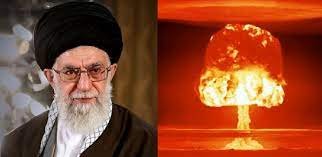
Iran is quickly advancing its nuclear program while it seems inactive. Iran nuclear threat emergesThe Biden Administration has deserted the rigorous sanctions imposed by the Trump Administration on Iran. Consequently, Iran is on the brink of obtaining nuclear capabilities. If President Biden wins re-election, it is likely that a substantial dispute in between Israel and Iran will occur. President Trump should strongly criticize Biden for his inadequate and dangerous approach toward Iran in the upcoming debate.
The International Atomic Energy Agency has sounded an unusual Atomic Energy Commission Alert on Iran accentuating a substantial milestone in Iran’s nuclear undertakings. Iran Nuclear Threat Surges! inspectors have confirmed that Iran has initiated a crucial action, marking a first, by introducing uranium gas into three sequences of advanced IR-4 and IR-6 centrifuges.
Centrifuges are at its Natanz enrichment center. These waterfalls, which include several centrifuges operating in unison, increase the effectiveness of uranium enrichment by spinning the uranium gas at extremely high speeds, permitting Iran to enrich it at a much faster rate and substantially decreasing the time required to produce nuclear weapons.
Iran Nuclear Threat Surges!
Iran is already enriching uranium to 84%, amazingly near to the 90%, “weapons grade” level. Iran, for that reason, may well be on the verge of acquiring the needed product for a-bombs. Iran’s rapid advancement of its nuclear weapons program comes at a time when the Biden administration not only seems non-active concerning the risk– it seems to be saving all
Iran Nuclear Threat Surges!Iran accelerated its production of uranium enriched to near-weapons-grade levels in November, according to the International Atomic Energy Agency (IAEA).
Iranian Foreign Minister Hossein Amirabdollahian, seen participating in a conference in Moscow, stated in a Dec. 9 speech that the nuclear offer known as the Joint Comprehensive Plan of Action is becoming “ineffective.”
Ramping up uranium output with a 60 percent concentration of the isotope U-235 is a cause for alarm, as this material can be rapidly further enriched to reach the highly enriched limit of 90 percent, which is appropriate for weapons use.
In a declaration on December 28, France, Germany, the United Kingdom, and its recent relocation we identified it as a regressive measure that reveals Tehran’s aversion to ease stress. The joint declaration characterized Iran’s actions as irresponsible within the current tense regional environment and called on Tehran to without delay undo these decisions.
Mohammad Elsami, head of the Atomic Energy Organization of Iran, dismissed the IAEA report as propaganda. The increase in the enrichment of uranium to 60 percent U-235 comes in the middle of blended signals from Tehran concerning its interest in nuclear diplomacy and bringing back the 2015 nuclear offer.
According to a declaration made by Iran’s Foreign Minister Hossein Amirabdollahian on December 9, the Joint Comprehensive Plan of Action (JCPOA), commonly described as the nuclear offer, is losing its worth. He stressed that the United States and Iran are currently not on track to restore the agreement, however Iran is open to reassessing its involvement if it aligns with the country’s benefits.
The comments recommend a subtle shift in Iranian messaging relating to the JCPOA. Iran publicly continued to support bringing back the accord long after the United States signified that going back to the nuclear deal is no longer a U.S. top priority.
During his testament before the Senate Foreign Relations Committee7, Kurt Campbell, the U.S. National Security Council coordinator for Indo-Pacific affairs and candidate for deputy secretary of state in the Biden, he highlighted that nuclear is not being considered under the present circumstances.
The United States’ plans concerning Iran’s progress in nuclear advancement are uncertain. Iran made small efforts to reduce specific atomic operations in the latter part of 2023. However, the attack by Hamas on Israel on October 7 and Israel’s subsequent military operation in Gaza appears to have halted talks on extra actions to reduce tensions. Iran Nuclear Threat Emerges (ACT, October 2023.)
The Biden administration continues to enforce sanctions against Iran. Still, it is more challenging for the United States to garner global assistance than it was in the time leading up to the JCPOA, when Washington, Beijing, and Moscow were aligned on pushing Tehran to work out.
Elsami said that sanctions have failed to halt the nation’s nuclear program. In a Dec. 15 speech, he said that Iran will continue to purchase, expanding its atomic energy activities.
Iran is enhancing its relationship with Moscow and backing Russia’s military intervention in Ukraine. During a conference on December 7th, Iranian President Ebrahim Raisi Vladimir Putin talked about how Iran’s support has assisted Russia in achieving significant development over the past year.
France, Germany, and the United Kingdom have declared that Iran is actively aiding Russia’s aggressive actions towards Ukraine and intentionally providing drones to be utilized against Ukrainian civilians.
Throughout a UN Security Council session on December 18, the three states raised allegations while examining the UN secretary-general’s report on enforcing Security Council Resolution 2231. This resolution supported the JCPOA and changed UN sanctions against Iran.
The critics condemned Iran’s consistent neglect for Resolution 2231, calling on the Tehran government to halt its harmful and significant efforts to spread out weapons of mass destruction in the Middle East and around the globe.
The UN rocket restrictions in the resolution ended in October, however the three states described proof that Iran transferred rockets, drones, and related innovations without Security Council approval before that date. (See ACT, November 2023.)
Throughout the Dec. 18 meeting, Vassily Nebenzia, the Russian ambassador to the United Nations, rejected that Moscow received military assistance from Iran in violation of Resolution 2231. He said, “There were not and could not be any shipments to circumvent” the resolution.
Nebenzia challenged the idea that the UN Secretariat has the mandate to probe and designate responsibility for resolution breaches, instead blaming the United States and Europe for exacerbating the present nuclear standoff.
The United States and the European parties to the JCPOA “bear the crucial responsibility for the failure to carry out the nuclear offer,” he said. Nebenzia added that Russia “stays convinced there are no alternatives” to the 2015 nuclear deal and anticipates “Western nations to desert their policy of unilateral constraints” against Iran.